Eye Center, Samitivej Sriracha Hospital
Comprehensive eye care with internationally standardized technology
The eyes are vital organs that affect quality of life. Regular eye examinations and eye care help reduce the risk of diseases and abnormalities that may affect vision.
Samitivej Sriracha Eye Center Providing a wide range of ophthalmology services, from screening, diagnosis, and treatment to rehabilitation, by a team of specialist physicians with appropriate tools and technology in accordance with professional standards.
We focus on patient-centered (Patient-Centered Care), prioritizing the rights, safety, and satisfaction of service recipients.
Technology and diagnostic/treatment equipment
The Samitivej Sriracha Eye Center has equipment and technology that support detailed, accurate, and safe eye examinations and treatments in accordance with medical standards, including:
Optical Coherence Tomography (OCT)
A high-resolution light-wave scanner for the retina and optic nerve head, used to detect diabetic retinopathy, glaucoma, and macular degenerationVisual Field Test (Computerized Static Perimetry)
Visual field testing to assess the width and quality of peripheral vision. Suitable for monitoring glaucoma patients.Fundus Photography
Retinal imaging without pupil dilation, making it convenient for monitoring diabetic retinopathy and macular degeneration.YAG Laser Capsulotomy / Argon Laser Photocoagulation
Laser technology used to treat posterior capsule opacification after cataract surgery, as well as to treat diabetic retinopathy and seal leakage points in cases of retinal tears or thinning.Phacoemulsification (cataract surgery using high-frequency ultrasound)
An international standard technique for cataract surgery that uses ultrasound waves to break the cloudy lens into small pieces and suction them out before implanting an intraocular lens (IOL) as a replacement.Pars Plana Vitrectomy
Retinal and vitreous surgery, suitable for vitreous hemorrhage, retinal detachment, or other retinal diseases.Slit-lamp Examination and Tonometry
Basic ophthalmic examination, such as evaluating eye structures with a slit lamp and measuring intraocular pressure to screen for glaucomaA-Scan / B-Scan Ocular Ultrasound
High-frequency ultrasound examination to measure axial length, calculate intraocular lens (IOL) power, and assess abnormalities in the posterior segment of the eyeIntravitreal Injection
Injection of medication into the vitreous cavity, used to treat retinal diseases caused by diabetes or age-related macular degeneration
""These technologies help doctors diagnose and choose appropriate treatment approaches effectively, depending on medical judgment."
Diseases and conditions we provide diagnosis and treatment for
Samitivej Sriracha Eye Center provides care for both pediatric and adult patients, covering everything from common general conditions to complex eye diseases that require specialized surgery, such as:
Cataract (Cataract)
A condition in which the eye’s lens becomes cloudy, causing blurred vision or seeing lights with glare/starbursts. The standard treatment is surgery using the technique of Phacoemulsification and implantation of an artificial intraocular lens.Glaucoma
A disease caused by high pressure inside the eye that damages the optic nerve. It is "Silent threat" that may cause permanent vision loss. Screening and follow-up with Visual Field Test and OCT are highly importantConjunctival and Corneal Diseases
For example, keratitis, corneal ulcers, pterygium. If these conditions are not treated, they may cause scarring and reduced vision.Retinal and Vitreous Diseases
Such as diabetic retinopathy, age-related macular degeneration (AMD), vitreous opacity or vitreous hemorrhage. Treatment may include Laser (Argon Laser) orRetinal surgery (Pars Plana Vitrectomy)Depends on the symptoms and the doctor's diagnosisUveitis
Inflammation inside the eye that may be associated with autoimmune diseases. Treatment often requires anti-inflammatory medication, and some cases may need close follow-up by a specialist.Neuro-ophthalmology
Related to the nervous system and brain, such as double vision, visual impairment from optic neuritis, or abnormalities of the muscles around the eyes, which often require evaluation together with MRI/CT.Eyelid and lacrimal duct diseases (Oculoplastic and Lacrimal Disorders)
For example, drooping eyelids, blocked tear ducts, or eyelid tumors. These conditions may require treatment with reconstructive surgery or tear duct opening surgery.OPediatric eye diseases and strabismus (Pediatric Ophthalmology and Strabismus)
For example, crossed eyes, strabismus, nearsightedness from mobile phone use. Screening from ages 3–5 can help prevent permanent visual impairment.Eye injuries and foreign bodies in the eye (Ocular Trauma and Foreign Body)
For example, accidents that cause blunt impact to the eye, metal fragments scratching the cornea, or chemicals entering the eye. Prompt evaluation and treatment are necessary to reduce the risk of vision loss.
"Appropriate treatment will depend on the discretion of the specialist physician.
FAQ (Q&A)
Frequently asked questions about eye health care
How often should you get an eye exam?
You should have an exam at least once a year, especially if you are over 40 or have a family history of eye diseases such as glaucoma.What is OCT and what can it detect?
OCT (Optical Coherence Tomography) is a high-resolution retinal imaging test using light waves. It is used to detect diabetic retinopathy, glaucoma, and macular degeneration.Can glaucoma be cured?
Glaucoma cannot be completely cured, but its progression can be controlled with medication, laser treatment, or surgery, depending on the physician’s judgment.Is cataract surgery painful?
Cataract surgery using the phacoemulsification technique is a safe standard, causes minimal pain, and allows for quick recovery. Treatment results vary depending on each patient’s condition.When should a child have their first eye exam?
It is recommended that a child have their first vision exam at age 3–5 to screen for crossed eyes, strabismus, and vision problems that may affect learning development.What is an intravitreal injection?
It is an injection of medication into the vitreous humor, used to treat age-related macular degeneration (AMD) and diabetic retinopathy, performed by a specialist physician.
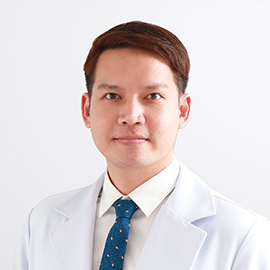
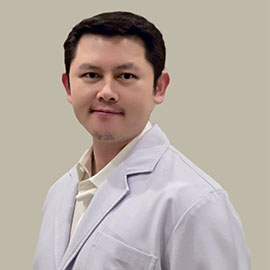
Team of ophthalmology specialists
Samitivej Sriracha Eye Center has a team of specialists across various subspecialties, providing care from common conditions to complex eye diseases, so that patients receive appropriate diagnosis and treatment in accordance with medical standards.
- Location2nd Floor, Building A
- Hours of OperationEvery day 08:00 – 20:00
- Phone038-320300
- Emailinfossh@samitivej.co.th