Dengue fever 

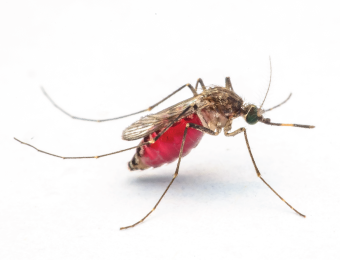
It is an infectious disease caused by infection with the dengue virus, which has 4 types. The vectors are the domestic Aedes mosquito (Aedes aegypti) and the forest Aedes mosquito (Aedes albopictus). When a mosquito bites a person with dengue hemorrhagic fever, the virus multiplies in the mosquito’s cells and some moves to the salivary glands. When the mosquito bites another person, it can transmit the virus further. This disease often outbreaks during the rainy season, but nowadays it can be found throughout the year.
Causative agent: Dengue virus
The dengue virus is a single-stranded RNA virus with 4 serotypes: DENV-1, DENV-2, DENV-3, and DENV-4. They share some common antigens, so after infection with one serotype, a person will have lifelong immunity to that serotype, but only short-term immunity to the other three serotypes for about 6–12 months (or possibly shorter). After that, infection with a different dengue serotype can occur; this is called a secondary infection. Therefore, people living in areas where dengue is common may be infected up to 4 times. Secondary infection is also an important factor contributing to more severe dengue hemorrhagic fever, although this also depends on several other important factors, such as the patient’s age and immune status.
Vector mosquito: Aedes mosquito
Aedes mosquitoes are commonly found throughout tropical regions. Their breeding sites are man-made water-holding containers where water has been left standing for more than 7 days; the water is clear and still. After sucking human blood, Aedes mosquitoes lay eggs on the water surface of containers. The eggs hatch into larvae within 2 days. The larvae then develop into pupae in 6–8 days. From the pupal stage, it takes 1–2 days to become an adult mosquito ready to seek food and mate. Aedes mosquitoes are most abundant during the rainy season. Aedes eggs that adhere to the inner surface of containers can withstand dryness for as long as a year. When the rainy season arrives, with suitable humidity and temperature, they can hatch and develop into mosquitoes within 9–12 days.

Incubation period: about 5–8 days
When a mosquito infected with dengue virus bites another person, it transmits the virus to the person bitten. After the virus enters the human body and passes an incubation period of about 5–8 days (as short as 3 days and as long as 15 days), the disease can develop and symptoms may appear.
Symptoms of the disease: severity varies
After being infected for 5–8 days (incubation period), symptoms will begin to appear, with varying severity—from general fever symptoms to very severe symptoms that can lead to shock and even death.
The symptoms of the disease can be divided into 3 stages:
High fever phase High continuous fever for 2–7 days; loss of appetite; nausea/vomiting; headache; pain around the eye sockets; muscle aches; flushed face, redness of the body; may have a rash or bleeding spots on the skin; and an enlarged liver may be found on examination.
Critical phase (shock and bleeding phase) may occur from day 3 of the illness or occur at the same time as the fever drops rapidly. The patient may have restlessness, rapid pulse, severe vomiting, abdominal pain or increasing tightness/discomfort under the pit of the stomach (epigastric area). Some become more drowsy, have decreased urine output, and may have bleeding in the stomach.
Recovery phase General condition has improved. Vital signs are within normal limits. Urine output has increased. Able to eat more. Rash on the arms and legs, with itching of the hands and feet.
Diagnosis: based on symptoms and laboratory blood tests.
Diagnosis includes clinical symptoms and blood tests showing a platelet count lower than normal, and/or detection of dengue virus in the blood (Dengue NS1 Ag) positive, or detection of immunity to dengue virus (Dengue IgM) positive.
Treatment/Care: no antiviral medication.
Symptomatic and supportive treatment: use antipyretics as needed; avoid high-fever antipyretic group or ibuprofen. Provide fluid replacement or drink plenty of oral rehydration salts, and monitor symptoms closely to prevent complications.
Patients who should receive care and treatment in the hospital
- Pediatric or elderly patients
- Have underlying diseases such as thalassemia, heart disease, kidney disease, etc.
- Obesity
- Unable to eat or having severe vomiting
- Severe abdominal pain
- Bleeding, such as vomiting blood or nosebleeds
- Restlessness or cold hands and feet
- Prevent mosquito bites
- Eliminate and destroy Aedes mosquito breeding sites, including:
- Dengue patients should avoid being bitten by mosquitoes during the first 5 days of illness to reduce spreading the virus to others.
- Report the patient to the hospital or provincial health center so officials can be sent to eliminate mosquitoes in that area before the outbreak worsens.
- Vaccine: Currently, there is a vaccine that is effective in reducing dengue virus infection and reducing disease severity if infected. It can currently be given to children from 4 years old up to adults 60 years old.
25 December 2023

Dr. Kanchana Wannawilai
Specialties: Pediatrics, Infectious Diseases
Related Packages
View All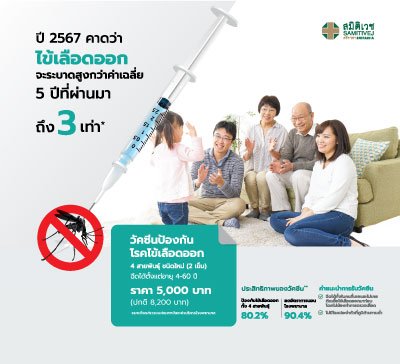
Dengue vaccine
In 2024, dengue is expected to spread at a rate 3 times higher than the 5-year average.