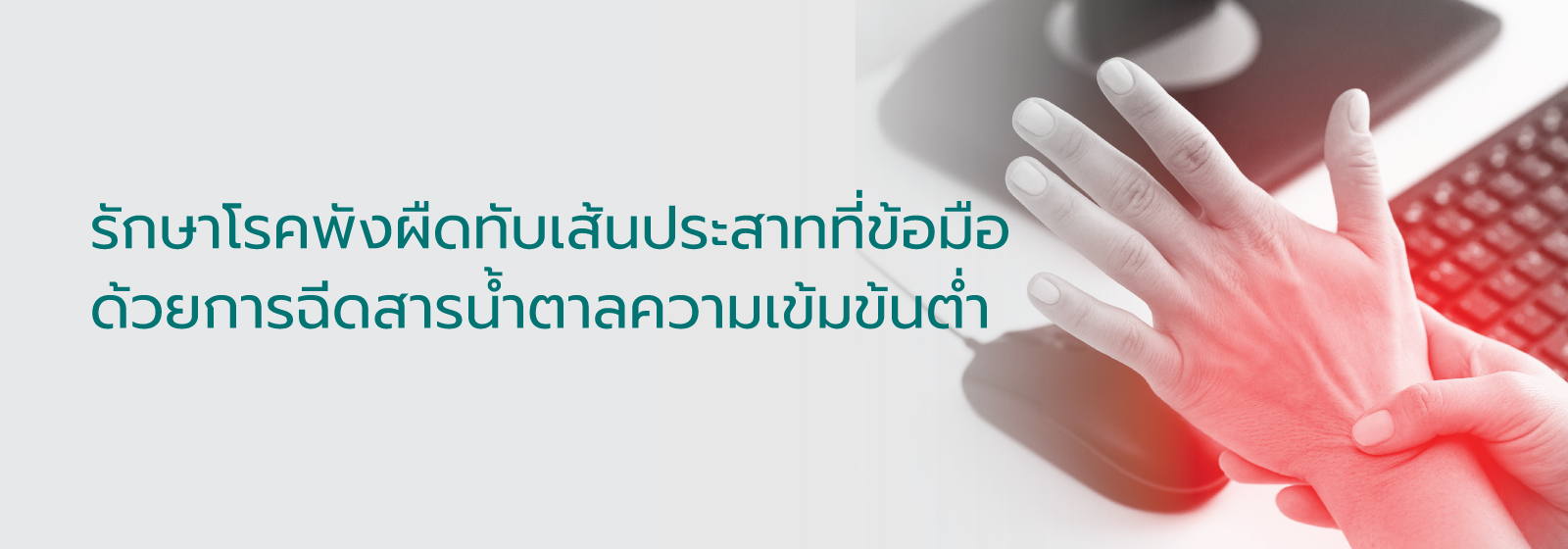
Treating carpal tunnel syndrome with ultrasound-guided low-concentration dextrose injection 

Dr. Sorawit Weerasophon
Carpal tunnel syndrome is a common condition. It becomes more frequent with age, especially around 50 years and older. It is mostly found in female patients who regularly use their wrists, such as housewives doing housework, but it is also not uncommon in males.
Patients will begin to experience pain and numbness from compression of the median nerve. Sensation in the fingers—from the thumb to the ring finger—decreases, with a tingling feeling at the fingertips. As symptoms worsen, the pain can become severe enough to wake the patient at night. Weakness of the thumb base muscles (thenar muscles) may begin. Eventually, the thenar muscles may waste away, leading to partial loss of thumb movement.
Treatment starts with behavior modification: reducing wrist use and wearing a splint to limit movement. In addition, taking pain- and swelling-reducing medications (NSAIDs), muscle relaxants, and vitamin B can also help. If symptoms do not improve, treatment may be adjusted to injections and surgery.
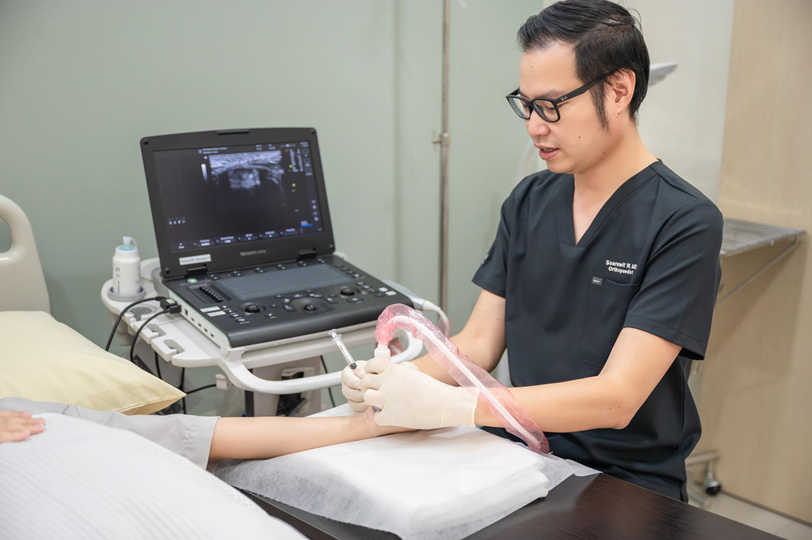
Current injection options have become more varied. “Steroid” is the main option because it is easy to obtain, but it has drawbacks: it can irritate tendons and nearby important structures. Therefore, injections are limited to two times, and other treatment options are then considered.
A new option is a solution that helps improve symptoms and prognosis with fewer side effects. That option is 5% DW, which helps nerves recover well (nerve regeneration). Injecting the solution also acts like releasing the nerve from surrounding tissues (hydrodissection).
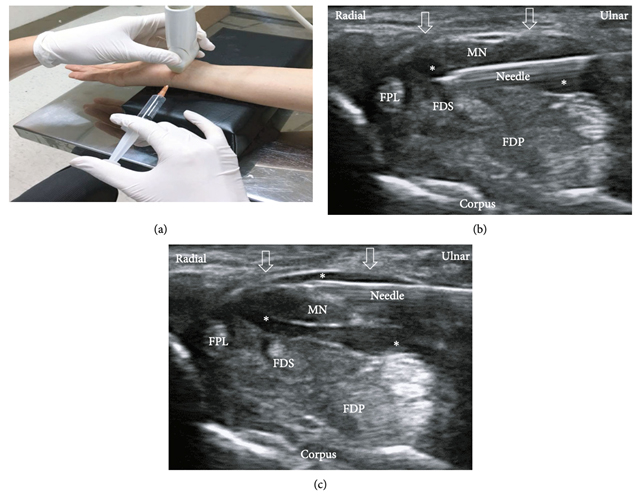
This type of injection requires precision when injecting around the nerve, so it must be performed under ultrasound guidance: Ultrasound-guided 5% DW CTS injection.
Patients will begin to experience pain and numbness from compression of the median nerve. Sensation in the fingers—from the thumb to the ring finger—decreases, with a tingling feeling at the fingertips. As symptoms worsen, the pain can become severe enough to wake the patient at night. Weakness of the thumb base muscles (thenar muscles) may begin. Eventually, the thenar muscles may waste away, leading to partial loss of thumb movement.
Treatment starts with behavior modification: reducing wrist use and wearing a splint to limit movement. In addition, taking pain- and swelling-reducing medications (NSAIDs), muscle relaxants, and vitamin B can also help. If symptoms do not improve, treatment may be adjusted to injections and surgery.
Current injection options have become more varied. “Steroid” is the main option because it is easy to obtain, but it has drawbacks: it can irritate tendons and nearby important structures. Therefore, injections are limited to two times, and other treatment options are then considered.
A new option is a solution that helps improve symptoms and prognosis with fewer side effects. That option is 5% DW, which helps nerves recover well (nerve regeneration). Injecting the solution also acts like releasing the nerve from surrounding tissues (hydrodissection).
This type of injection requires precision when injecting around the nerve, so it must be performed under ultrasound guidance: Ultrasound-guided 5% DW CTS injection.
31 January 2024

Dr. Sarawit Weerasophon
Expertise: Orthopedic Surgery, Hand Surgery and Microsurgery